Football's Evolving Spectacle: From Local Pitches to Global Arenas
Trace the historical evolution of the football matchday experience, from humble origins to modern global spectacles, exploring stadium development and fan culture.
Football's Evolving Spectacle: From Local Pitches to Global Arenas
The roar of the crowd, the scent of damp earth and anticipation, the shared anxiety and elation – it’s a sensory symphony that defines the football matchday. Yet, this experience, so visceral and immediate, is not a timeless constant. The modern football spectacle, from the architectural marvels of its stadiums to the intricate rituals of its supporters, is a product of profound historical evolution, a journey that has transformed local village greens into global coliseums and the simple act of watching a game into a rich cultural phenomenon.
The Humble Genesis: Local Pitches and Nascent Fandom
The early days of football were characterized by a simple, localized matchday experience, with basic grounds and a fan culture intrinsically tied to immediate community identity, a stark contrast to the globalized spectacles of the modern era.
Key Takeaway
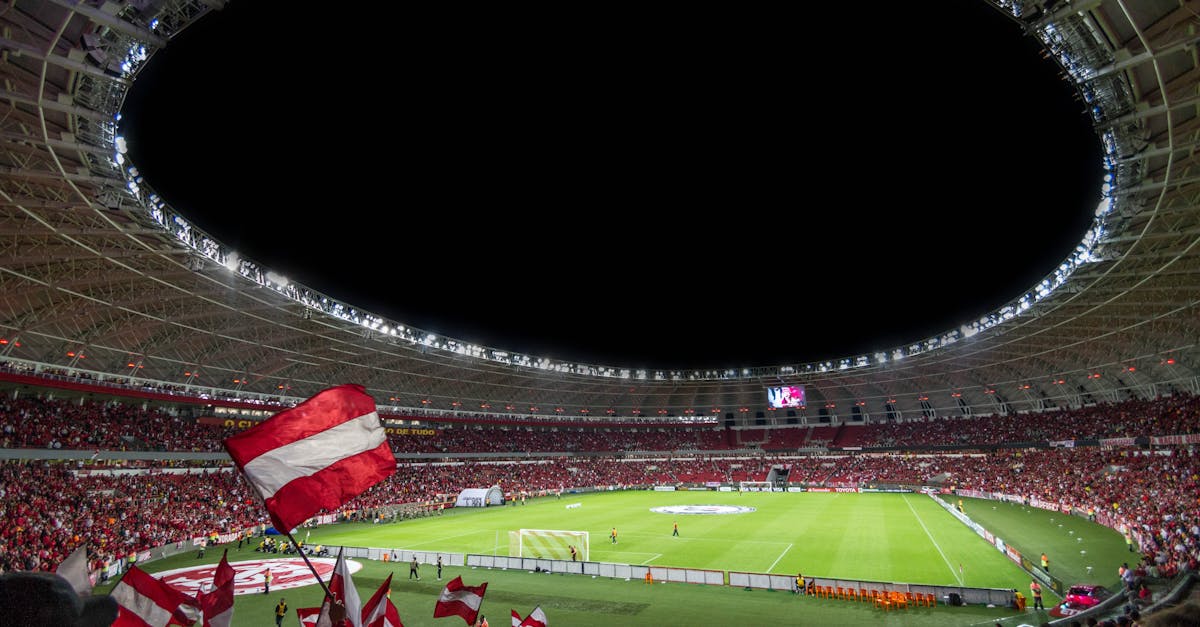
The mid-20th century saw football stadiums grow into monumental arenas, fostering organized fan culture and a more intense, unified atmosphere, laying the groundwork for the global appeal and travel associated with the sport today.
🎯 Did You Know?The Olympic rings represent five continents: Africa, Americas, Asia, Europe, and Oceania.
The Rise of the Arena: Architecture, Atmosphere, and Early Globalization
As football professionalized and gained wider appeal throughout the 20th century, the physical venues began to evolve dramatically. The mid-20th century, particularly the post-war boom, saw the construction and expansion of iconic stadiums that became cathedrals of the sport. Venues like Brazil's Maracanã, England's Wembley Stadium (old and new), and Italy's San Siro weren't just places to watch a game; they were architectural statements, designed to house tens of thousands, fostering a collective energy. This era also witnessed the formalization of organized fan groups and the emergence of distinct stadium atmospheres. Chants became more coordinated, banners more elaborate, and the visual spectacle of the stands began to rival the action on the pitch. This period marked the beginning of a subtle globalization of fandom, as major international tournaments and influential club competitions began to capture the imagination beyond national borders. News of significant matches, even without instant digital feeds, would travel, inspiring fans to seek out these legendary grounds. The development of travel infrastructure, such as improved rail networks and later affordable air travel, made pilgrimage to these football meccas more feasible for dedicated supporters, slowly expanding the reach of club and national team fandom. The scale of events, hinting at massive viewership figures akin to those found on modern platforms like cyber_livescore/skelleftea ff vs gottne if tt395079329 or cyber_ket qua bong da us breno vs nibionnoggiono tt328773728, began to be conceptualized in terms of sheer human gathering.
Key Takeaway
The digital age has revolutionized the football experience by creating global connectivity, enabling instant access to information, and fostering a hybrid fan culture that blends physical attendance with extensive online engagement.
The Digital Age: Global Connectivity, Data, and the Hybrid Fan
The late 20th and 21st centuries have ushered in perhaps the most radical transformation yet, driven by technological advancements and commercial globalization. Modern stadiums are often multi-purpose, technologically advanced venues with corporate hospitality, vast screens, and sophisticated crowd management systems. The fan experience is no longer confined to the 90 minutes of play. Digital platforms have created a 24/7 football ecosystem. Live scores from leagues across the globe, such as those found on cyber_livescore/ktp kotka nu vs helsinki b nu tt231637430 and cyber_livescore/lyn nu vs aasane nu tt382999336, are instantly accessible, fostering a sense of global football consciousness. Data analytics now influence tactical discussions and player performance analysis, feeding into fan discourse online. This has also led to the rise of the 'hybrid fan' – individuals who engage with their club both physically at the stadium and virtually through social media, streaming services, and online forums. Travel to matches, while still a significant undertaking, is now facilitated by online booking and a wealth of information, making international fan tourism a norm. The passion for national teams, as seen in events like the cyber_sea games/vo thuat sea games/p2 or the fervent support for teams like Vietnam against rivals such as Indonesia as reflected in discussions like cyber_hau ve nhap tich indonesia toi khong so dt viet nam tt66295, mirrors the intense loyalty of club fans, demonstrating the universal appeal of competitive sport. The constant stream of news, from transfer sagas (news 58231210) to major club developments (news 41960921, news 48450229, news 67192762), keeps fans perpetually engaged, blurring the lines between observer and active participant. This evolution has made the football matchday a complex, multi-layered experience, blending tradition with cutting-edge connectivity.
Key Milestones in Modern Stadium Evolution
- Introduction of floodlights, enabling evening fixtures and expanding matchday accessibility.
- Construction of all-seater stadiums, driven by safety regulations and a shift in viewing comfort.
- Integration of digital infrastructure: large screens, Wi-Fi, and mobile connectivity for enhanced fan engagement.
- Development of multi-functional venues catering to concerts and other events, increasing revenue streams and stadium utilization.
- Sustainability initiatives becoming integral to new stadium design and operation.
Key Takeaway
In football's nascent years, the matchday experience was a far cry from the curated, high-tech events of today. Evidence suggests that in the late 19th and early 20th centuries, games were often played on rudimentary pitches, sometimes little more than demarcated fields on common land. The 'stadium' was often a designated corner of a park, perhaps with a rudimentary barrier or a simple wooden stand for a few hundred spectators. Fan culture was organic, deeply rooted in local identity. Supporters were neighbours, friends, and family, gathering to cheer on their local club. Travel was largely confined to nearby towns for derby matches, a significant undertaking involving trains or even horse-drawn carts. The atmosphere, while passionate, was intimate, a reflection of the era's social fabric. The focus was on the game itself, the unfolding drama on the turf, rather than the elaborate infrastructure and global broadcast reach we see today. Early pioneers of the sport often played and watched in these unpretentious settings, forging the initial bonds of club loyalty that would echo through generations. The very concept of a 'fan' as a distinct cultural entity was still in its infancy.
Bottom Line
The historical trajectory of the football matchday is a compelling narrative of adaptation and innovation. From the communal gatherings on muddy fields of yesteryear to the hyper-connected, globally accessible spectacles of today, the journey reflects broader societal and technological changes. The stadium has evolved from a simple enclosure to a complex entertainment hub, and the fan has transformed from a localized observer to a globally connected participant. This continuous evolution, driven by cultural shifts, architectural advancements, and digital integration, ensures that the football experience, while deeply rooted in tradition, remains a dynamic and ever-changing phenomenon for fans worldwide.
Browse by Category
- Cyber_lich Thi Dau Tennis Ngay 20 1 Vong 2 Australian Open Tam Diem Medvedev Vs Kyrgios Tt33337
- Cyber_ket Qua Bong Da/Oliveirense Vs Feirense Tt233166034
- Cyber_ket_qua_bong_da/Osasuna_vs_getafe_tt399447231
- Cyber_livescore/Romania Inter Star Vs Musongati Fc Tt488581631
- Cyber_livescore/Halide Edip Adivarspor Vs Musspor Tt362802032
- Cyber_ket Qua Bong Da/Sporting B Nu Vs Benfica B Nu Tt282098336
- Cyber_ket Qua Bong Da Chelmianka Chelm Vs Wisloka Debica Tt345505134
- Cyber_livescore/Wydad Serghini Vs Raja De Beni Mellal Tt383125720
- Cyber_ket_qua_bong_da/Dnipro1_u21_vs_kryvbas_u21_tt250754036
- Cyber_livescorepaok Saloniki Vs Volos Nfc Tt369872037
- Cyber_dt Nu Trung Quoc Bi Nhm Nhat Ban Che Gieu Da Thi Te Chi Gioi Kungfu Tt80451
- Cyber_iba Treo Thuong Lon Cho Cac Vdv Boxing Du Olympic Paris Tt100023
- Cyber_ket Qua Bong Da/Bulawayo Chiefs Vs Hwange Colliery Tt355925233
- Cyber_livescore/Sd Huesca Vs Granada Cf Tt228517433
Sources & References
- UEFA Technical Reports — uefa.com (Tactical analysis & competition data)
- FIFA Official Reports — fifa.com (Tournament & qualification data)
- The Athletic Football Analysis — theathletic.com (In-depth tactical breakdowns)
Explore More Topics (15)
- News 75199223
- Cyber_bong Da/Cup C1/Video Highlight Liverpool Vs Ac Milan Salah Ghi Ban Henderson Tai Hien Tuyet Chieu Cua Gerrard Tt19815
- Cyber_livescore/Universidad Catolica Vs Deportivo Cuenca Tt233050722
- Cyber_ket Qua Bong Da/First Wien 1894 Vs Stpolten Tt111611035
- Cyber_livescore/Santa Clara Vs Nacional Da Madeira Tt232188724
- Cyber_ket Qua Bong Da/Ac Este Vs Luparense Fc Tt355774933
- Cyber_ket Qua Bong Da/Senyo Carnifex Vs Deac Tt389343133
- Cs Cerrito Vs Cerro Largo Highlights
- Cyber_livescore/Joy_st_louis_park_vs_med_city_fc_tt386936138
- Cyber_livescore/Tromso Il Vs Kryvbas Tt339759534
- Cyber_marcus Rashford Het Bi Dong Doi Quay Lung Lai Bi Ban Gai Ruong Bo Tt110677
- Israeli Premier League Mid Season Report And Playoff Predictions
- Cyber_doan The Thao Viet Nam Xuat Quan Du Asiad 19 Tt83712
- News 29185468
- News 57518351