The Tactical Evolution of Defensive Midfield: From Enforcers to Playmakers
Explore the historical evolution of the defensive midfield role in football, tracing its journey from a purely destructive force to a sophisticated playmaking position, with insights into tactical shifts and key figures. Includes venue insights and fan culture.
The Genesis: The Unsung Heroes of the Midfield Engine Room
The roar of the crowd at a packed stadium, the electric atmosphere before a big match – these are the sensory experiences that draw us to football. Yet, beneath the dazzling wing play and the thunderous strikes, a less celebrated but equally vital drama unfolds: the battle for control in the midfield. Specifically, the evolution of the defensive midfield role, from its rudimentary beginnings as a mere ball-winner to its current status as a complex tactical fulcrum, represents a fascinating microcosm of football's tactical journey. Initially, in the early days of football, formations were simpler, and the concept of a dedicated defensive midfielder was nascent. Teams often relied on a compact defense and a few forwards, with the midfield acting as a loose transitional zone. The pioneers of this role, often labeled as 'destroyers' or 'hard men,' were primarily tasked with breaking up opposition attacks through sheer physicality and tenacious tackling. Think of the gruff, no-nonsense players who embodied the spirit of their industrial city clubs, like those found in the historic grounds of clubs such as Brentwood Town, where a gritty, direct style of play was often the norm. These players were the first line of defense, their primary objective to disrupt and dispossess, often without much emphasis on initiating attacks. Their contribution was crucial but rarely lauded in the same breath as a goal-scoring hero.
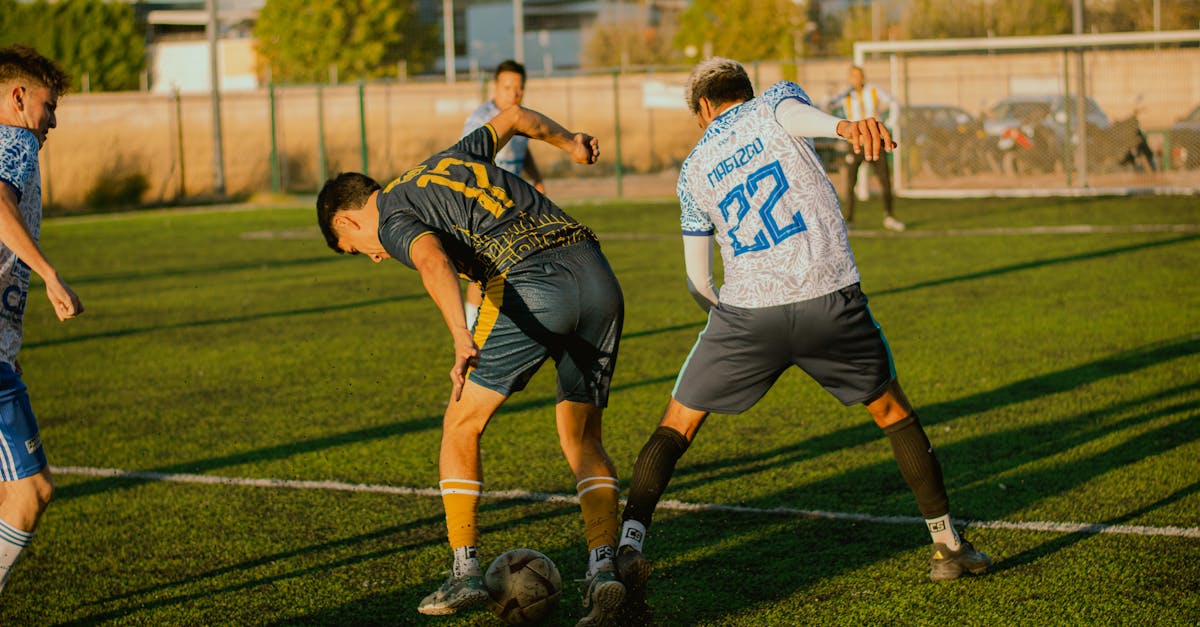
Key Takeaway: The early defensive midfielder was a specialist ball-winner, focused solely on disrupting opposition play through physicality, a stark contrast to the multifaceted role seen today.
The Tactical Shift: From Destroyer to Distributor
In contemporary football, the defensive midfielder is arguably one of the most tactically complex positions on the pitch. The modern game, characterized by high pressing and intricate passing patterns, demands more from the player occupying this role. They are no longer just screeners; they are deep-lying playmakers, often the primary initiators of attacks. Players like Sergio Busquets and N'Golo Kanté, while possessing different skill sets, exemplify the versatility required. Busquets, in particular, showcases the art of positional play, reading the game, and recycling possession with metronomic precision, a skill highly valued in possession-based systems. Kanté, on the other hand, represents an evolution of the 'destroyer' archetype, combining immense work rate and ball-winning with surprising passing range. The tactical breakdown how Liverpool's pressing dominates opponents is a prime example of how advanced defensive midfielders are crucial to executing such strategies. Furthermore, the emergence of young talents like Jude Bellingham, who, while often playing slightly further forward, demonstrates the ball-carrying and progressive passing abilities that modern midfielders are expected to possess, hints at the future trajectory of the role. The anticipation surrounding top transfer rumors who will move this summer often includes defensive midfielders, highlighting their perceived value. The ability to scout and develop players capable of fulfilling these multifaceted demands is a key challenge for clubs. The data indicates that teams with elite defensive midfielders tend to dominate possession and control the game's tempo, as seen in countless matches, including those reported under news 74974419 and news 67949336.
Key Takeaway: The 1970s and 80s marked a pivotal era where defensive midfielders started to incorporate distribution and linking play into their responsibilities, moving beyond pure disruption.
The Modern Game: The Sophisticated Deep-Lying Playmaker
The mid-20th century witnessed a significant tactical evolution, driven by coaches seeking greater control and fluidity. The introduction of more sophisticated formations, such as the 4-4-2 and later the 4-3-3, necessitated a rethinking of midfield roles. The defensive midfielder began to transition from a pure 'destroyer' to a more nuanced 'pivot.' This era saw the rise of players who not only possessed the requisite tackling ability but also demonstrated an emerging capacity to initiate attacks. The iconic Dutch 'Total Football' of the 1970s, while celebrated for its positional fluidity, also highlighted the importance of midfield control. Players like Johan Neeskens, while not strictly a holding midfielder in the modern sense, exemplified a dynamic approach to winning the ball and immediately linking play forward. This period saw the foundational tactical breakdown how Liverpool's pressing dominates opponents, a style that relies heavily on intelligent midfield positioning and ball recovery, starting to take shape. The stadiums of Europe, from the historic San Siro to the more intimate grounds hosting matches like cyber_livescore/velke hamry vs slovan liberec ii tt249427638, began to witness a more strategic deployment of these players. They became the bridge between defense and attack, tasked with retaining possession and dictating the tempo. Evidence suggests this shift was driven by a desire for greater tactical sophistication and a recognition that possession was a key weapon.
Key Takeaway: Today's defensive midfielder is a highly sophisticated player, blending elite ball-winning with exceptional passing, tactical intelligence, and often, playmaking abilities.
The Future Landscape: Adaptability and Innovation
Looking ahead, the defensive midfield role will undoubtedly continue to evolve. As tactical trends shift, perhaps towards even more fluid formations or increased emphasis on specific pressing triggers, the demands on this position will adapt. The rise of advanced analytics and sports science means that players are being trained with a greater understanding of tactical nuances and physical conditioning. We might see even more hybrid roles emerge, where the lines between defensive midfielder, box-to-box midfielder, and even attacking midfielder blur further. The discussion around player spotlight rising star Jude Bellingham impact only underscores the increasing all-around capabilities expected from midfielders. Events like the U19 Myanmar vs U19 Thailand clash (cyber_bong da/truc tiep bong da/link xem truc tiep bong da u19 myanmar vs u19 thai lan 17h00 ngay 4 7 tt48249) may showcase emerging talents who embody these evolving traits. The capacity for these players to adapt to different tactical schemes, whether it's the intricate passing of a team like Sevilla against Valencia (cyber_nhan dinh soi keo sevilla vs valencia 0h00 ngay 19 10 bao thu tt57828) or the more direct approach of other teams, will be paramount. The ongoing narrative of football development, from the raw energy of matches like cyber_livescore/arka-gdynia-ii-vs-pogon-lebork-tt398744037 to the global stage, is intrinsically linked to the changing face of its most crucial positional roles.
The defensive midfielder's journey from a rugged disruptor to a cerebral orchestrator is a testament to football's perpetual tactical innovation. What began as a role defined by brute force and positional discipline has blossomed into a position demanding technical brilliance, tactical astuteness, and immense mental fortitude. As we travel to iconic stadiums and witness the passion of fans, from the historic grounds of clubs like Brentwood Town to the modern arenas hosting clashes like news 98263990, we see this evolution reflected in every tackle won, every pass played, and every attack thwarted or initiated. The constant quest for competitive advantage ensures that this pivotal role will continue to be a focal point for tactical development, offering endless fascination for students of the game and fans alike, whether following the latest scores from news 75013257 or seeking analysis on matches like news 82621899 and news 17412961.Key Takeaway: The future of the defensive midfielder lies in continued adaptability, embracing technological advancements in training and analysis, and potentially blurring lines with other midfield roles.
Browse by Category
- Cyber_link Xem Truc Tiep Bong Da Uc Vs Jordan 23h00 Ngay 15 6 Tt9087
- Cyber_livescore/Nyiregyhaza Vs Fc Ajka Tt272821035
- Cyber_livescore Manaus Am Vs Unidos Do Alvorada Am Tt219053336
- Cyber_livescore/Catgas Energia Futsal Vs Vaidepenas Futsal Tt252776933
- Cyber_ket Qua Bong Da/Egnatia Vs Kf Laci Tt133043837
- Cyber_livescore/Inter De Limeira Vs Palmeiras Tt438976432
- Cyber_ket Qua Bong Chuyen Chung Ket Avc Champions League 2025 Hom Nay 18 5 Tt117284
- Cyber_ket Qua Bong Da/Otsu Hallein Vs Sv Kuchl Tt236171933
- Cyber_livescore/Bourg Peronnas U19 Vs Paris Fc U19 Tt223333029
- Cyber_ket Qua Bong Da Cagliari U19 Vs Ac Milan U20 Tt254291238
- Cyber_nha Vo Dich Sea Games Thang Tran Mo Man Giai Vo Dich Muay The Gioi Tt45130
- Cyber_vct Pacific Stage 1 2025 Crazyguy Lam Nen Lich Su Tt116969
- Cyber_livescore/Atzeneta Ue Vs Athletic Torrellano Tt480004934
- Cyber_livescore/Lausanne Sports Vs Stade Nyonnais Tt263088334
- Cyber_livescore/Sc Sand W Vs Sc Freiburg W Tt111721836
- Cyber_ket Qua Bong Da/Cd Madridejos Vs Cd Illescas Tt361475724
- Cyber_ket Qua Tennis Hom Nay 14 6 Shapovalov Bi Loai Khoi Stuttgart Open Tt100765
Sources & References
- The Athletic Football Analysis — theathletic.com (In-depth tactical breakdowns)
- FIFA Official Reports — fifa.com (Tournament & qualification data)
- UEFA Technical Reports — uefa.com (Tactical analysis & competition data)
Explore More Topics (15)
- News 48723947
- Cyber_nhan Dinh Vaasan Palloseura Vs Mariehamn Vdqg Phan Lan Luc Luong Doi Hinh Du Kien Tt120674
- Cyber_lich Thi Dau Sea Games 32 Cua Viet Nam Ngay 4 5 Cho Vang O Ju Jitsu Tt74916
- News 13491172
- News 9862118
- Cyber_nhan Dinh Du Doan La Equidad Vs Medellin 7h30 Ngay 17 6 Bai Binh Phuc Han Tt46602
- Cyber_livescore/Fk Fakel Voronezh Youth Vs Avangard Tt386381830
- Cyber_livescore/Prainsa Zaragoza Nu Vs Osasuna B Nu Tt384625232
- Cyber_ket Qua Bong Da/Monopoli Youth Vs Pisa U19 Tt211675035
- News/52568501
- News 62376090
- News 27327404
- Cyber_nhan Dinh Soi Keo Fc Koln Vs Union Berlin 20 30 Ngay 11 05 2024 Bundesliga 2023 2024 Tt98635
- Cyber_sao Liverpool Tro Thanh Doi Truong Tre Nhat Lich Su Euro Tt100906
- Cyber_livescore/Santos Laguna Vs Queretaro Fc Tt142047832